

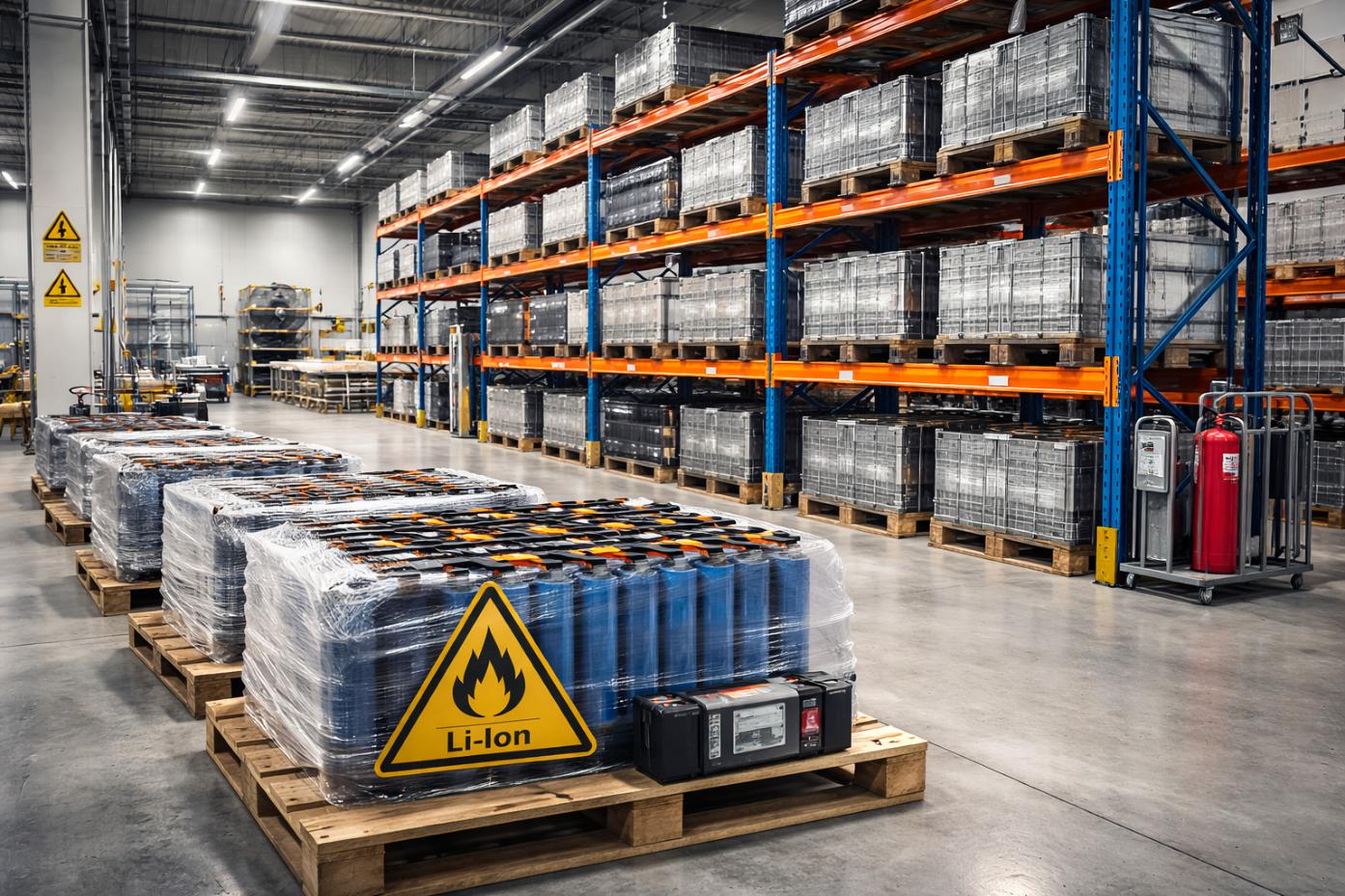
Lithium batteries and energy storage systems: technical aspects and safety in storage
The rapid spread of electrochemical energy storage systems based on lithium batteries has made these devices a structural component of modern energy systems: photovoltaic plants, microgrids, industrial applications, and electric mobility. However, increased performance and energy density also mean greater complexity in risk management, particularly during storage and operation phases.
In Italy, the most comprehensive technical reference on this topic is the joint study by ENEA – National Fire Brigade, which systematically analyzes the hazards associated with the storage of lithium-ion energy storage systems.
Consult the ENEA–Fire Brigade reference document on Li-ion system storage safety
Chemical-physical characteristics and safety implications
Lithium is a highly reactive alkali metal with a very low reduction potential.
In lithium-ion batteries, it is not present as free metal under nominal conditions, but its chemistry remains the foundation of the high energy density of these batteries.
Lithium-ion cells consist of:
- cathode (lithiated metal oxides, e.g., NMC, LFP, LCO);
- anode (generally graphite);
- organic electrolyte containing lithium salts (e.g., LiPF₆);
- polymeric separator.
Under thermal, electrical, or mechanical abuse conditions, the system may evolve toward thermal runaway, with simultaneous release of energy and matter, representing the most severe accident scenario.
Passive storage and active storage: differences in risk
The ENEA–Fire Brigade document correctly distinguishes between:
Passive storage
Logistical situations where batteries are not subjected to charge/discharge cycles and have a reduced state of charge (typically ≤30% SOC).
This category includes warehouses, storage facilities, collection centers, and WEEE supply chains.
Active storage
Includes systems in operation or charging, such as:
- stationary energy storage systems (ESS);
- charging rooms for electric vehicles;
- garages hosting electric vehicles.
Active storage involves increased risk due to higher available electrochemical energy, continuous variation of state of charge, and accelerated cell aging.
Aging, SOC, and electrochemical instability
A frequently overlooked aspect in ESS design is battery aging, which manifests as capacity reduction, increased internal resistance, and greater susceptibility to abuse conditions.
The study highlights how high temperatures and elevated average SOC accelerate calendar aging, increasing the risk of internal failures.
For this reason, managing the charging profile and environmental conditions is an integral part of system safety.
Emissions in case of fire: not only a thermal risk
In the event of a lithium-ion battery fire, the risk is not limited to flames.
Combustion fumes may contain:
- hydrofluoric acid (HF), resulting from decomposition of electrolytes and binders;
- fine and respirable particulate matter;
- carbonyl compounds of heavy metals;
- nanomaterials.
Quantifying emissions is complex and depends on cell chemistry, which is often not fully disclosed. For this reason, emergency response protocols require Category III personal protective equipment (PPE) for rescue operators.
Want to design a safe and compliant energy storage system?
If you are developing an energy storage plant, a microgrid, or an industrial application and would like to deepen your understanding of storage safety aspects, we can support you during the design phase.
Prevention: from cell level to complete system
Risk prevention cannot rely on a single element but must involve the entire system, including: cell-level safety devices (PTC, CID, venting); separators with shut-down effect, Battery Management System (BMS) for monitoring voltages, currents, and temperatures.
In addition, it must include proper thermal system design (air or liquid cooling), as well as layout and compartmentalization of installation spaces.
It is within this integration of chemistry, electronics, and system engineering that the true safety of an ESS is determined.
The role of design in Archimede Energia energy storage systems
In the design of energy storage systems, Archimede Energia adopts an approach consistent with ENEA–Fire Brigade technical guidelines, with particular focus on:
- selection of battery technology according to the application;
- control of charge and discharge profiles;
- thermal management and ventilation;
- compliance with fire prevention regulations.
The objective is not only to maximize installed capacity, but to ensure long-term operational stability and safety.
Lithium batteries represent a mature yet complex technology. The safety of energy storage systems cannot be addressed through standardized solutions, but requires in-depth knowledge of electrochemical phenomena, proper risk assessment, and integrated system design.
Only in this way can electrochemical storage fully express its strategic role in the energy transition.
Want to learn more?
Get in touch with our Team to define a storage system compliant with regulations and designed for maximum reliability.