
In the modern industrial context, the transition toward electrification and advanced storage systems represents an increasingly important element in the development of industrial machinery and vehicles.
However, transforming a perfectly functioning prototype in the laboratory into an industrial battery produced in series requires a significant methodological leap.
Moving to industrial scale means creating a solution that is producible, verifiable, certifiable, and sustainable throughout the product’s entire lifecycle.
A lithium battery for industrial or professional applications is never an isolated component or a simple “box of energy”, but an integrated system in which cells, BMS (Battery Management System), thermal management, mechanics, wiring, firmware, and testing must be designed to work together.
For an OEM manufacturer, underestimating one of these aspects can lead to late project changes, increased costs, delays in industrialization, or issues during field use.
In this scenario, Archimede Energia qualifies as a technological and strategic co-design partner, supporting the OEM at every single stage of the battery industrialization journey.
6 Errors to Avoid in the Transition from Prototype to Series Production
Many industrial projects suffer from delays, extra costs, or require modifications during the transition from prototype to production. Identifying the main critical issues in advance allows for risk reduction and simplifies industrialization.
- Exclusively Electrical Design: Limiting the evaluation to voltage and capacity while neglecting internal resistance, dynamic load profiles, and temperature behavior under stress leads to frequent undersizing.
Corrective Action: Analyze continuous and peak real current profiles right from the start.
- Lack of Design for Manufacturing (DFM): Assembling prototypes by hand without defining repeatable processes, assembly tolerances, and intermediate testing makes series production expensive and prone to error.
Corrective Action: Design the battery from the beginning with ease of assembly and verifiability on the production line in mind.
- Neglected Thermal Management: Underestimating heat dissipation creates thermal gradients and hot spots within the pack, accelerating premature and asymmetric cell aging.
Corrective Action: Simulate and test thermal flows to ensure temperature consistency in all conditions.
- Late BMS Integration: Choosing or developing the electronic management system at the end of the project forces binding compromises on mechanics, wiring, and safety features.
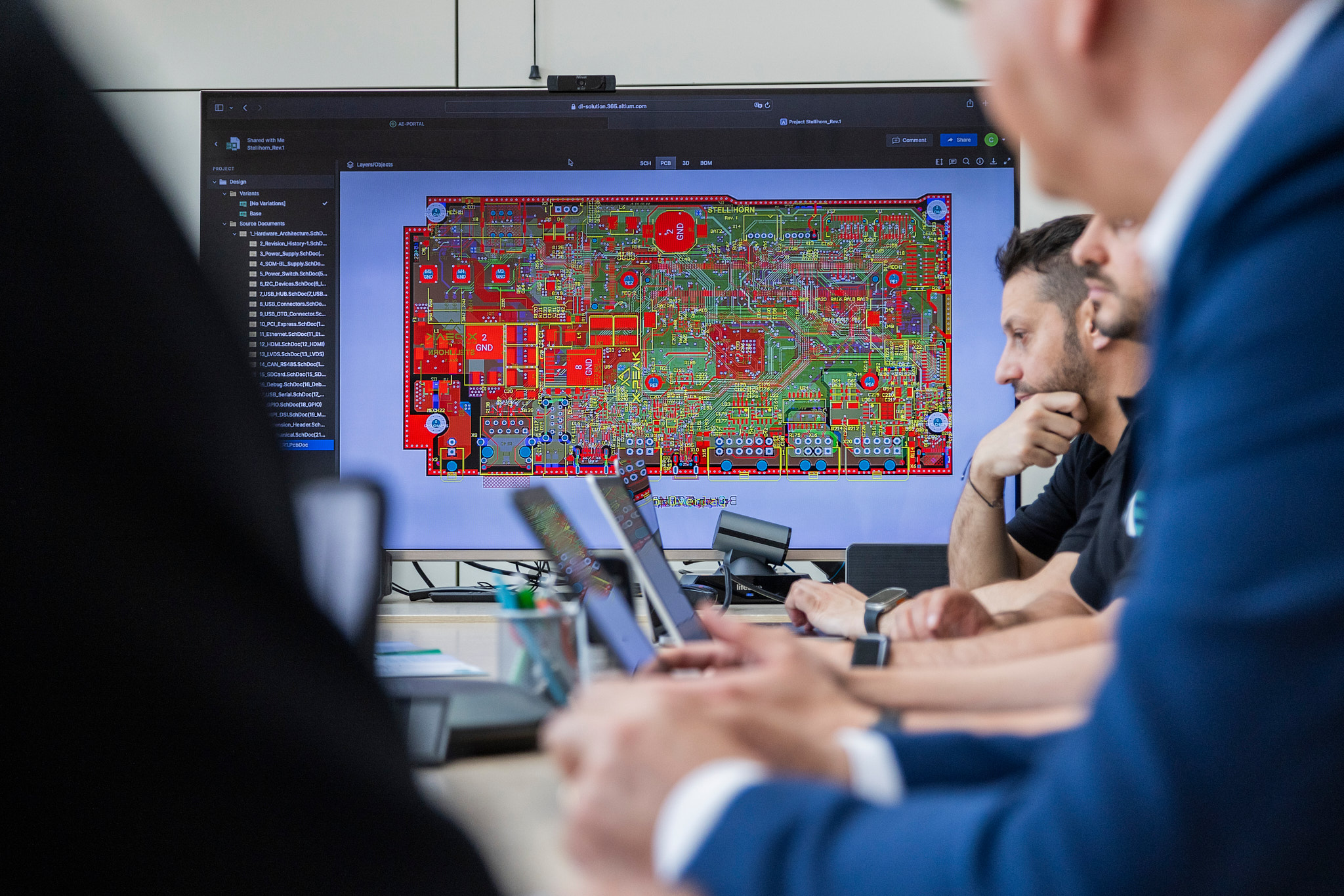
Corrective Action: Integrate the custom BMS architecture at the same time as the mechanical layout.
- Insufficient Validation and Testing: Verifying performance only under nominal conditions prevents detecting anomalies linked to fast transients, climatic limits, and real failure scenarios.
Corrective Action: Execute strict test plans that include vibration testing, electromagnetic compatibility, and real fault simulations.
- Flawed Documentation and Traceability: Informally managing electrical schematics, bill of materials (BOM), and firmware revisions hinders reproducibility and complicates after-sales service.
Corrective Action: Rigorously code every component and software version with precise tracking.
The Phases of OEM Battery Development
Effective industrialization of OEM solutions and custom lithium batteries follows a rigorous sequence of closely linked phases.
Phase A: Application Analysis
There is no universal lithium battery. Each application sector imposes specific requirements and precise constraints:
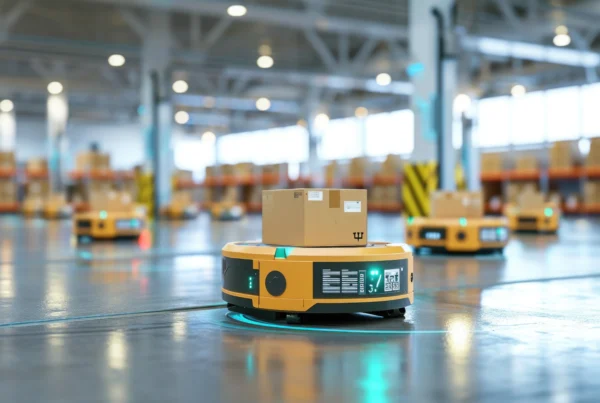
- AGVs and AMRs: Require the ability to support partial fast charges (opportunity charging), a high number of daily micro-cycles, extremely accurate State of Charge (SOC) estimation, and remote diagnostics via CAN bus.
- BESS Systems (Battery Energy Storage System): Require special attention to energy efficiency, thermal stability, and calendar/cycle life.
- Light Electric Vehicles and Micro-Mobility: Weight, size, energy density, vibrations, power peaks, and regenerative braking management can become critical parameters.
- Lighting Towers and Mobile Equipment: Require protection against atmospheric agents, low consumption during idle periods, and the ability to operate in challenging environmental conditions.
Phase B: Definition of Technical Specifications
The minimum requirements to formally establish at the beginning of the collaboration include:
- Operating Voltage: Definition of the full range (minimum, nominal, maximum at full charge) and strategic derating thresholds.
- Current Profile: Detailed analysis of continuous current, inrush transients, peak duration, and rest times.
- Autonomy and EOL Energy: Calculation of useful energy required at End of Life (EOL), considering chemistry efficiency, usable SOC window, and operating temperatures.
- Environment and Protection: Definition of IP ratings, working/storage temperature limits, vibration specs, and mandatory certifications for the target market.
- Machine Interface: CAN bus, J1939, or other protocols needed to exchange status, alarms, and operating limits.
Phase C: Chemistry Selection LFP vs NMC
The choice of chemistry determines the core performance of the battery pack:
- LFP (Lithium Iron Phosphate): Ideal choice for maximum cycle life (over 3000-4000 cycles), extremely high thermal stability, intrinsic safety, and cost-effectiveness in continuous cycles. Particularly suitable for BESS, AGVs, marine, and lighting towers.
- NMC (Nickel Manganese Cobalt): Ideal when space and weight constraints are extremely tight and maximum energy density is required, though demanding advanced thermal management.
Phase D: Mechanical Design and Advanced Thermal Management
Mechanical design ensures cell isolation and protection against external stress, integrating DFM criteria to optimize assembly times and facilitate maintenance (e.g., immediate access to fuses and contactors). In parallel, thermal modeling and simulation prevent temperature imbalances between modules, ensuring uniform degradation of all cells over time.
Phase E: Custom BMS Development (Battery Management System)
The BMS represents the true “brain” of the battery. A custom BMS must guarantee:
- Protection and Diagnostics: Management of overvoltage, undervoltage, overcurrent, and overtemperature with derating logic and active safety disconnection.
- Estimation and Communication: Algorithms for precise calculation of SOC (State of Charge) and SOH (State of Health), integrated with standard industrial communication protocols (e.g., CAN Bus, J1939).
- Data Logging: Recording operating history and anomalies to enable predictive maintenance and speed up after-sales support.
Phase F: Validation, Testing, and Industrial Process
The process concludes with a rigorous qualification phase:
- Comprehensive Test Plans: Functional checks, climate chamber cycles, vibration and mechanical shock tests, electromagnetic compatibility (EMC) tests, and field tests on the OEM machine.
- Industrial Process: Definition of the bill of materials (BOM) with approved alternative components to ensure supply continuity, unit traceability, and automated end-of-line (EOL) testing.
Have a project in mind? Let’s talk.
Contact us for more information about our solutions and discover how Archimede Energia can support your company’s needs.
Why “Made in Italy” OEM Lithium is the Winning Choice
Developing and engineering custom lithium batteries in Italy and Europe offers significant strategic and operational advantages compared to importing standard products from outside the EU:
- Quality and Regulatory Compliance: Guaranteed adherence to the strictest European quality standards, with certified and tracked manufacturing processes.
- Supply Chain Responsiveness: Drastic reduction in shipping times and zero risk related to logistics bottlenecks or import duties.
- Co-Design and Direct Presence: Opportunity to work closely with a dedicated team of engineers capable of performing tests and checks directly on the OEM machine prototype.
From Prototype to Series: The Value of Co-Design
For an OEM manufacturer, the value of a technology partner lies not only in supplying the battery, but in the ability to properly integrate it into the machine.
Archimede Energia adopts a co-design approach that includes:
- electrical, electronic, mechanical, and software expertise;
- development and direct control of the Archimede BMS;
- customization of firmware logic and CAN interfaces;
- revision management and system traceability;
- support during application validation;
- ability to start from already industrialized platforms or develop specific solutions.
Industrialization Best Practices
- Start the analysis of regulatory requirements and certification path in good time.
- Size the battery based on actual usage profiles and not just nominal values.
- Consider performance required at End of Life.
- Integrate charger, BMS, and machine as parts of the same system.
- Reduce consumption when the machine is turned off to limit discharge risks during long storage periods.
- Define traceability, testing, and manufacturing processes right from the prototype stage.
Proper industrialization allows you to reduce field failure risks, scale production, and control Total Cost of Ownership (TCO) over the product life cycle.
Industrializing a lithium battery therefore means transforming the energy requirements of a machine into a reliable, reproducible system integrated with the application.
This is why battery design should start alongside machine design, rather than when the machine layout is already finalized.
Fill in the form to download the guide for designers and OEMs
Are you designing an autonomous vehicle? Fill in the form below and discover all the key criteria for sizing and integrating the ideal battery for your system.