
Every company that manages assets in the field faces the same challenge: understanding what is really happening, at the right moment. Whether the assets are batteries, generators, plants or machinery, the value of IoT is not simply in connecting a device to the internet, but in turning data into operational decisions.
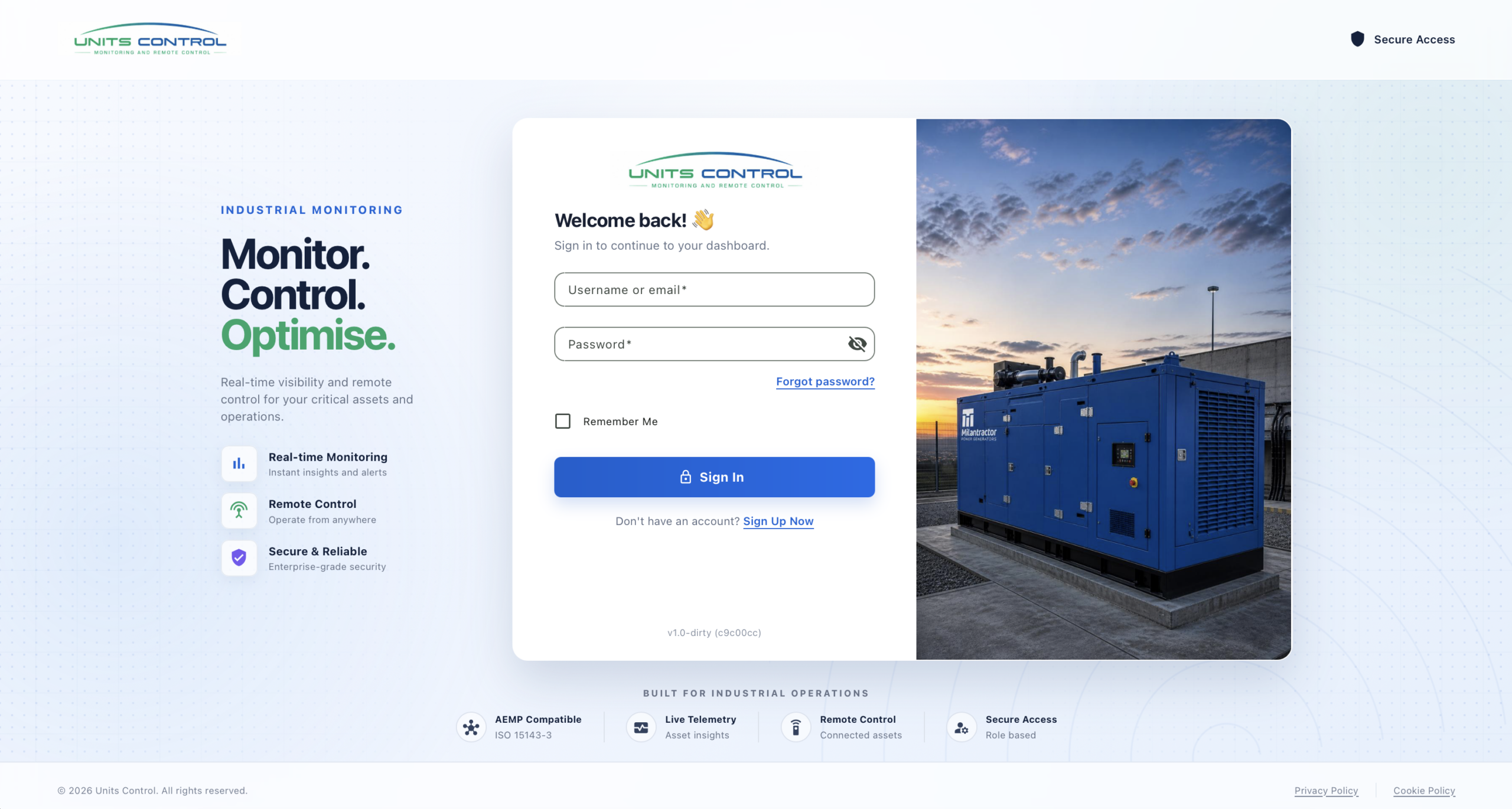
At Archimede Energia we created a battery monitoring system: status control, measurement readings, alarm management and historical analysis. That first concrete need became the starting point for a broader IoT framework, which can now be applied across different contexts.
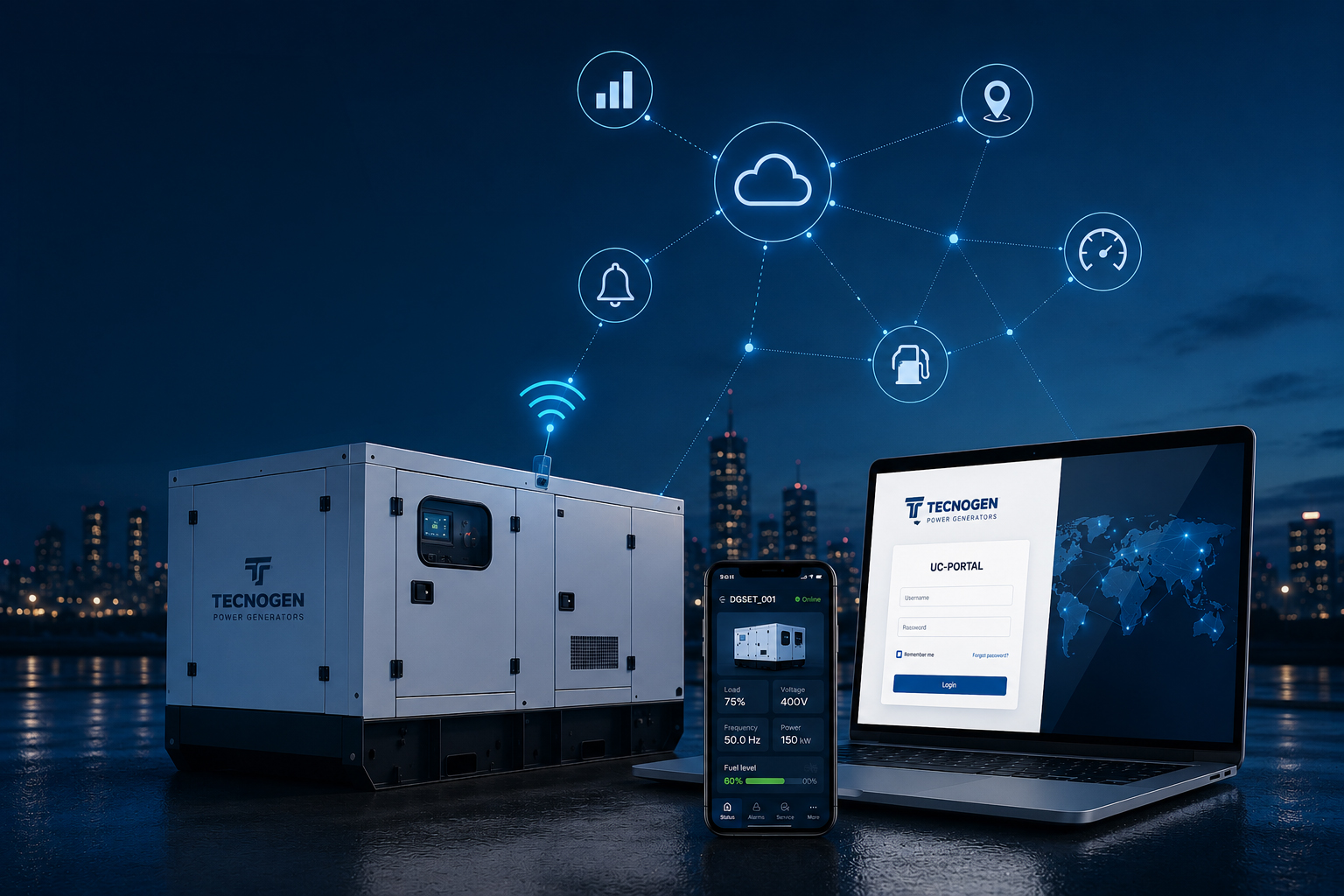
A clear example is CES POWER, which uses the platform to monitor and manage hire power generators. The same logic originally developed for battery monitoring has been adapted to an environment where availability, consumption, load, fuel, service continuity and sustainability are central elements.
What are the benefits?
The main advantage of the framework is its flexibility. There is no need to start from scratch every time: the platform already provides device, user and customer management, dashboards, notifications, historical data, reports, maps and operational tools. It is then shaped around the customer’s specific requirements.
In the case of CES POWER, the system makes it possible to track each generator throughout the hire cycle: unit availability, customer assignment, hire period, technical specifications, measurements, charts, alarms and operational history.
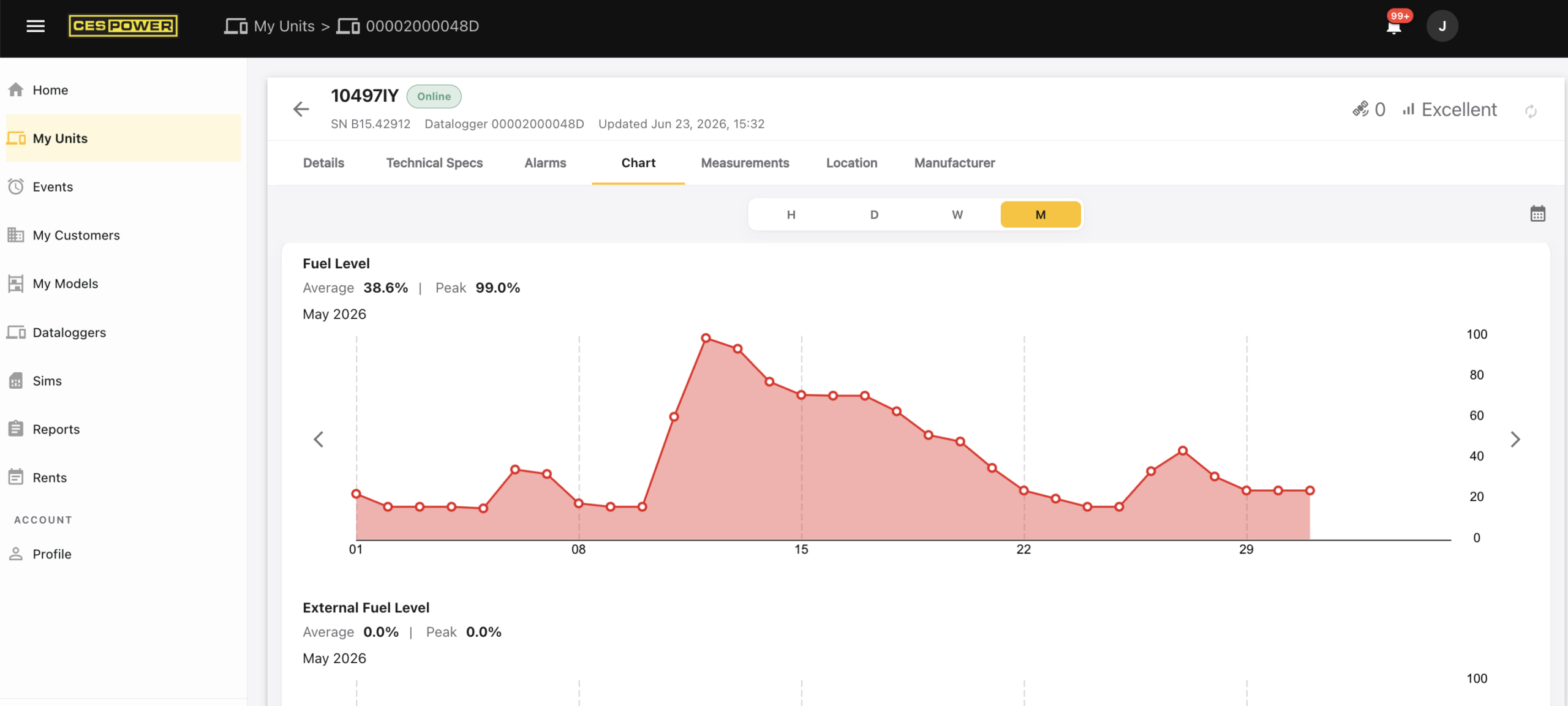
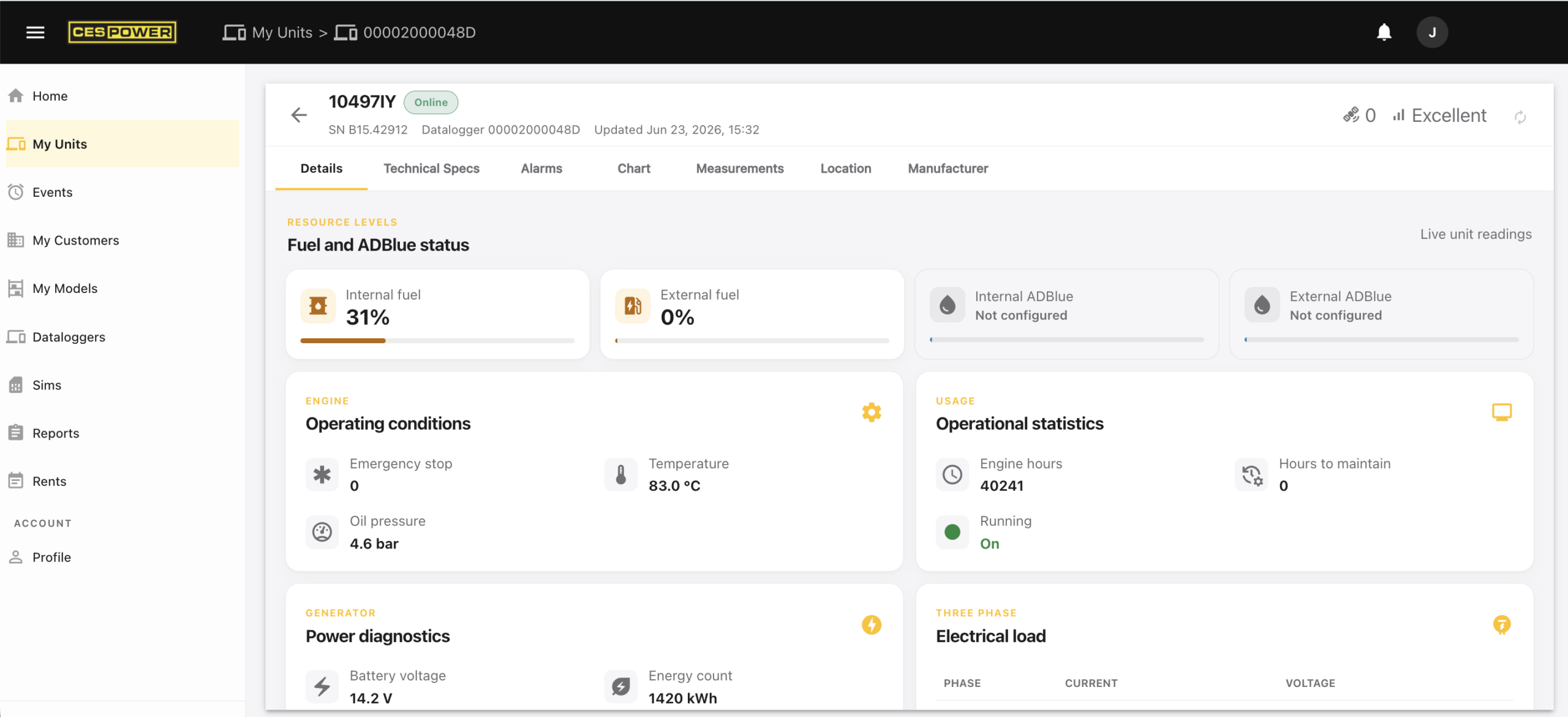
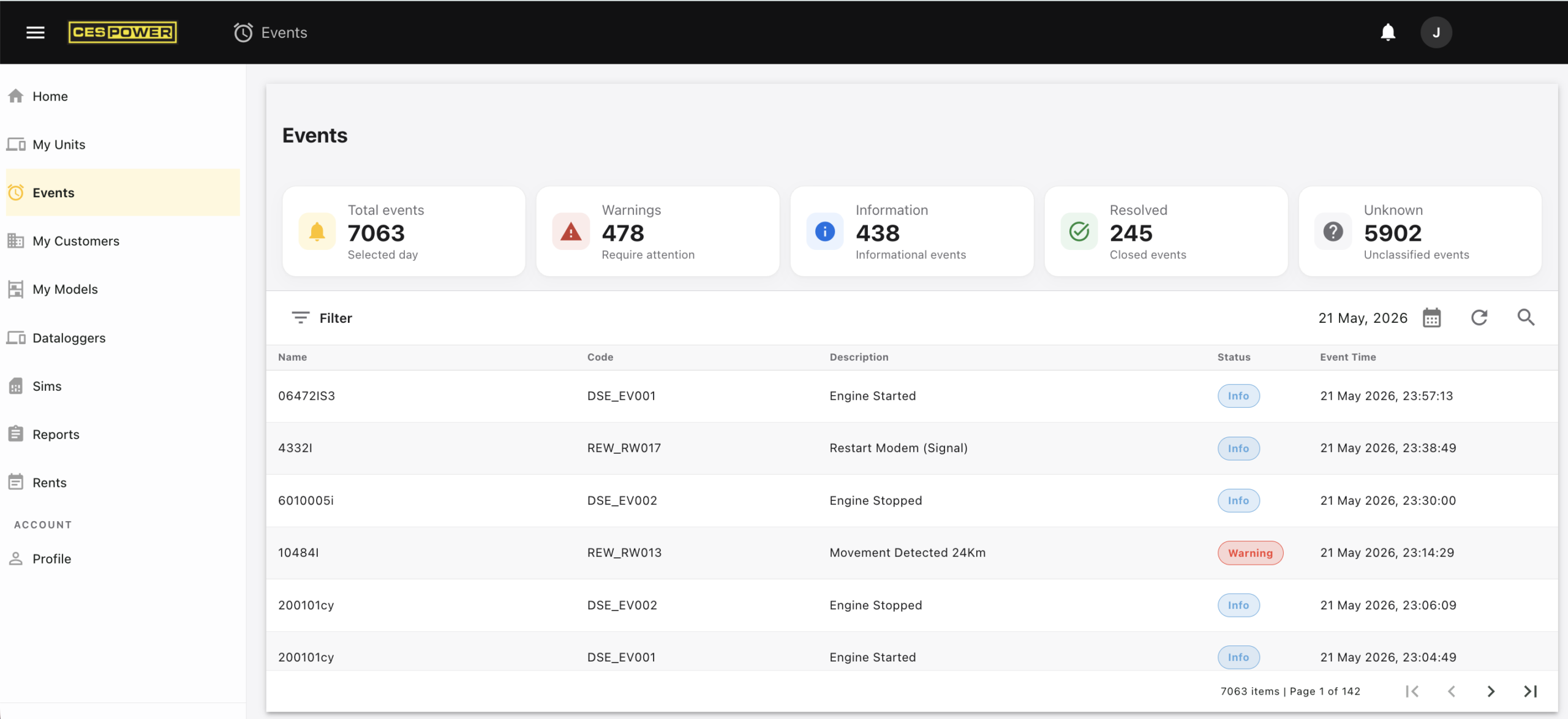
The platform monitors key parameters such as internal and external fuel levels, generator load, consumption trends, running hours, battery voltage, anomalies and performance. This enables CES POWER not only to monitor the fleet, but to optimise it.
Jamie Nesbitt, Operations Director at CES POWER, summarised the value of telemetry applied to sustainability as follows:
Reporting is essential to achieving tangible results in sustainability. We are aware of this and recognise the role we can play not only in helping ourselves make better-informed decisions, but also in supporting our customers, who rely on us for reliable and efficient power supply.
Just last week, using our telemetry system to monitor a customer’s fuel consumption, we noticed that the generator’s full capacity was not being used. We recommended switching from a 60 kVA generator to a 40 kVA unit, achieving a fuel saving of around 330 litres per week and a consequent reduction in CO₂ emissions of 903 kg.
Savings like this are essential. We all have a role to play in reaching the net zero target. With accurate reporting, meaningful results can be achieved.
Jamie Nesbitt, Operations D
This is the real value of IoT: not just seeing the data, but using it to make better decisions. Reducing consumption, cutting emissions, preventing downtime and offering customers a more efficient service.
Most commonly used tools
The framework combines IoT technologies and management tools in a single platform.
Communication with devices takes place via MQTT, a lightweight and reliable protocol for receiving data from the field and sending remote commands. Data is stored in InfluxDB, which is ideal for managing time-based measurements such as fuel, power, battery status, alarms, GPS position and load profiles.
The application layer integrates a PHP backend with REST APIs and an Angular frontend, with authentication, user roles, customer, device and model management, notifications, reports and dashboards.
For CES POWER, these tools become operational functions: hire list, calendar, hire detail, contract overview, generator technical specifications, hourly, daily and weekly charts, measurements and alarms linked to the hire period.
The platform can also evolve towards advanced features such as CO₂ emissions calculation, fuel autonomy forecasts and reporting to support sustainability targets.
Conclusion
The journey that began at Archimede Energia shows how a solution created for a specific requirement can become an IoT framework applicable to many different organisations.
With CES POWER, this approach has found a concrete application in power generator hire. The platform makes it possible to monitor the fleet, optimise consumption, improve generator sizing, reduce emissions and prevent issues before they become machine downtime.
For an entrepreneur, the message is simple: IoT works when it starts from a real need. There is no value in collecting data for its own sake. The point is to connect the right assets, read the information that matters and turn it into action.
Whether the assets are batteries, generators, plants or machinery, our framework allows tailored solutions to be built from a ready-made, tested and adaptable foundation. CES POWER demonstrates this clearly: when data is clear, decisions become more efficient too.
Do you have generators, batteries, plants or machinery to monitor?
Find out how to turn data from your assets into more efficient operational decisions.