
In recent years, lithium batteries have become the heart of the global energy transition. From electric cars to energy storage systems and advanced industrial applications, lithium-ion technology is now the benchmark for efficiency, reliability, and scalability.
At the same time, the sector is often accompanied by sensationalist announcements and promises of imminent revolutions that risk creating confusion among companies, designers, and decision-makers.
The reality is different: change is already underway, but it is a gradual, industrial evolution, strongly driven by cost optimization as shown by the Smart City XL analysis with Stefano Passerini.
Industry analysis and technical insights show that the future of batteries will be built more on the integration of different technologies than on the sudden appearance of a single “miraculous” solution.
Lithium batteries: how they work and why they dominate the market
Today, lithium-ion batteries represent the dominant technology in numerous application sectors:
- electric cars
- energy storage systems
- industrial applications
Their operation is based on the anode (graphite), cathode (metal oxides), and electrolyte during charge and discharge cycles.
This technology is already mature, but lithium batteries continue to evolve rapidly in several aspects:
- increase in energy density
- improved safety
- reduction in charging times
- increase in life cycles
- lowering of costs
Today, the real competitive advantage is not just energy capacity, but the optimization of the entire battery system, including the Battery Management System (BMS), thermal management, and electronic integration.
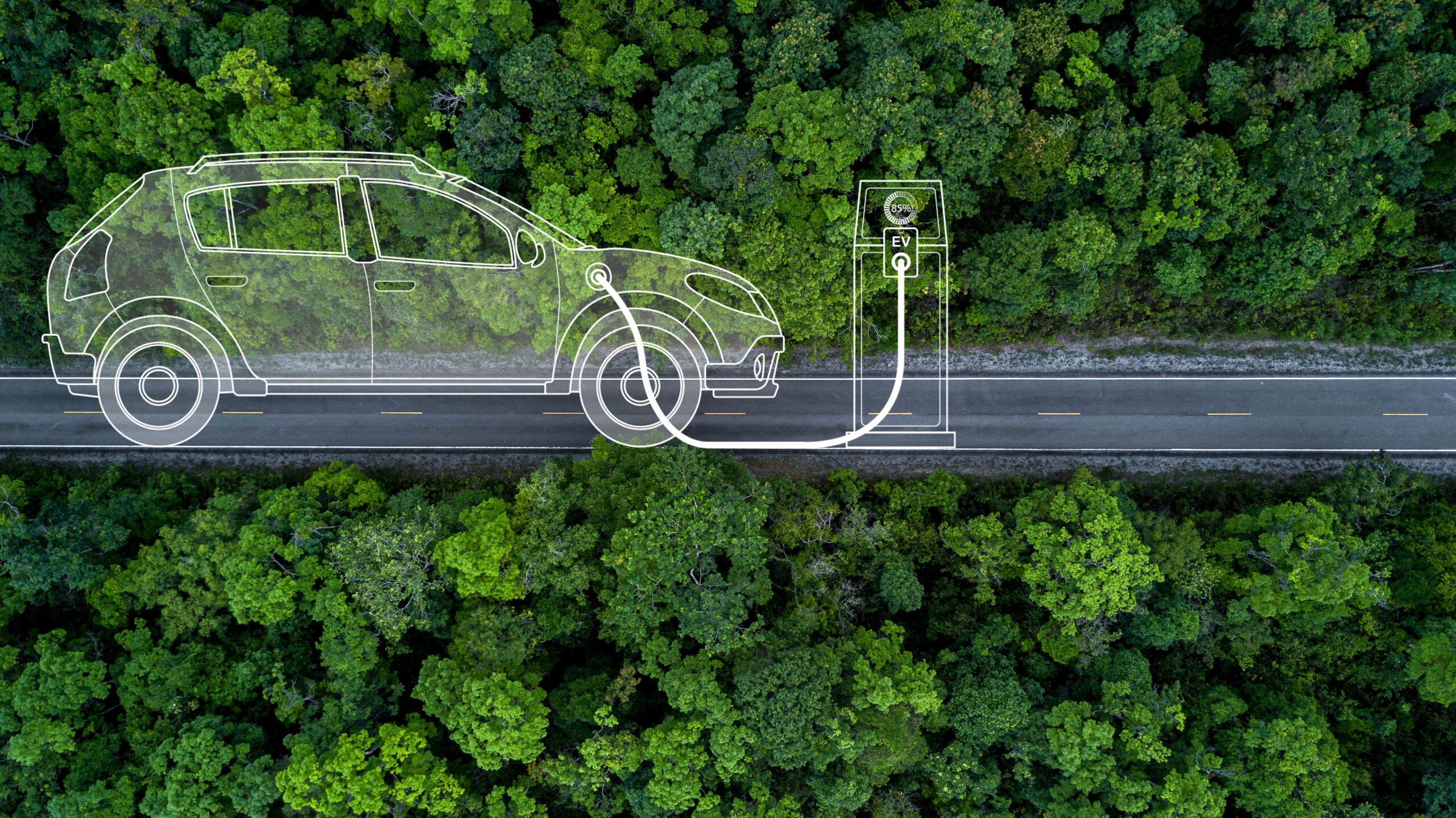
Electric car charging times: where we stand
One of the most searched questions online concerns electric car charging times.
In recent years, technology has made enormous progress. Modern fast charge infrastructures already allow for:
- up to 80% charge in about 20–30 minutes
- powers exceeding 300 kW in HPC stations
- intelligent management of the charging curve
From a technical point of view, the limit of the batteries is less and less the real obstacle.
The main challenges today instead concern:
- infrastructure availability
- electrical grid stability
- energy distribution
- economic accessibility
In other words, the technology is ready. The real acceleration will depend on the capacity of energy systems to support a mass diffusion of electric mobility.
Lithium battery costs: the real game changer
If there is one variable transforming the electric mobility market, it is the cost of lithium batteries per kWh.
In the last ten years, the price of cells has decreased drastically thanks to:
- increase in production volumes
- industrial optimization
- improvement of supply chains
- innovations in materials
Today, LFP (Lithium Iron Phosphate) batteries have dropped below $60/kWh in some Asian markets. For many analysts, the key threshold for the competitiveness of electric cars compared to internal combustion engines is around $80/kWh.
This means the market is entering a historic phase: electric cars are reaching, or have already reached in several segments, cost parity with traditional vehicles.
The theme is therefore no longer just environmental, but increasingly economic and industrial.
Global battery market: who is really leading the sector
Today, the global battery market is dominated by China. Over the years, the country has built a strategic leadership along the entire supply chain:
- extraction and refining of raw materials
- cell production
- battery pack integration
- production infrastructure
China produces about one million electric vehicles per month and is home to some of the main global players:
- BYD
- CATL
- Tesla
This leadership depends not only on production capacity but above all on the speed of industrialization and cost reduction.
For European companies, the challenge will be to build more resilient and independent supply chains, while maintaining high qualitative and technological standards.
Sodium batteries: an increasingly concrete alternative to lithium
Among the new emerging technologies, sodium batteries are attracting growing interest.
Considered an experimental solution for years, they are now moving concretely from the laboratory to industrial production.
The main reason is simple: sodium is abundant, cheap, and easily available.
According to several Asian manufacturers, including Hina Battery Technology, cost parity between sodium batteries and lithium batteries could arrive by 2027.
Current indicative costs are:
- lithium: 0.3–0.5 yuan/Wh
- sodium: 0.5–0.7 yuan/Wh
The difference is rapidly narrowing thanks to the increase in industrial production.
Sodium battery performance: the real data
One of the most interesting aspects concerns the operational performance of sodium batteries.
Promising results have emerged from tests on commercial vehicles and industrial applications:
- reduction in energy consumption by up to 15%
- increase in autonomy by up to 20%
- over 8,000 charging cycles
Furthermore, sodium batteries show excellent performance in extreme environments:
- operation from -40°C to +60°C
- maintenance of over 90% capacity even at low temperatures
These characteristics make them particularly interesting for:
- energy storage
- industrial applications
- operational vehicles
- energy infrastructures
- stationary systems
Battery energy density: the gap is narrowing
Historically, the main advantage of lithium batteries was energy density.
For years, sodium batteries remained far behind in this respect. Today, however, the gap is closing rapidly.
The most recent sodium cells have reached:
- up to 180 Wh/kg
- about 175 Wh/kg in advanced prototypes developed by CATL
For comparison, many LFP batteries used today in electric vehicles fall in the 160–210 Wh/kg range.
This means that sodium is becoming a concrete solution not only for stationary storage but also for some mobility applications.
The future of batteries: towards a multi-technology ecosystem
One of the most common beliefs is that a single technology is destined to replace all others.
Industrial reality is instead moving in a different direction.
The future of batteries will likely be characterized by a multi-technology ecosystem:
- lithium as the dominant standard
- LFP for safety and cost reduction
- sodium for storage and industrial applications
- other chemistries dedicated to specific niches
Each application will have different needs:
- autonomy
- energy density
- safety
- operating temperature
- life cycles
- total cost of ownership (TCO)
For this reason, the real strategic competence will be knowing how to choose the most suitable technology depending on the project.
The role of Archimede Energia
In an increasingly articulated technological scenario, value is not only in the production of cells but in the ability to design efficient, reliable, and integrable battery systems.
As a manufacturer specializing in lithium batteries, we support companies and decision-makers in developing:
- industrial energy storage systems
- custom battery packs
- applications for electric mobility
- BMS integration
- total cost of ownership optimization
We assist clients in:
- selecting the most suitable chemistry
- energy system design
- performance evaluation
- software and hardware integration
- future evolution of battery platforms
The goal is not to chase the next “revolution,” but to build concrete, scalable, and sustainable solutions over time.
How to choose custom lithium battery packs for electric vehicles?
Batteries are no longer an emerging technology.
They are a strategic lever for industrial competitiveness, electrification, and energy efficiency.
In the coming years, we will witness:
- continuous cost reduction
- performance increase
- growth of alternative technologies
- spread of new energy ecosystems
The key point for companies will be one: don’t wait for the next revolution, but choose the right technology for your project today.
Want to understand which solution is best for your project?
Archimede Energia supports you in choosing and designing battery-based systems, optimized for cost, performance, and durability.